About the Manitoba Indigenous Summer Games (MISG)
Since 1999, the Manitoba Indigenous Summer Games (MISG) provided Aboriginal athletes, coaches and officials in Manitoba the opportunity to fully participate in their own multi-sport competition. It emphasized active participation in sporting competition for our Aboriginal youth regardless of sport specific skill levels, age and gender. Sport competition was one of the many goals of which participants took advantage. Opportunities to meet new friends, develop social interaction skills and gain valuable educational experiences in the diverse cultural and traditional practices found in the Aboriginal population were all found equally valuable, if not more important, than competition alone.
The Opaskwayak Cree Nation (OCN) will always be recognized as the founders of the Manitoba Indigenous Summer Games. They had the dream for Aboriginal youth to participate with other Aboriginal youth in mainstream sport competition, at the same time learning many valuable tangible and intangible skills and knowledge about themselves as Aboriginal people.
The Manitoba Aboriginal Sports and Recreation Council has proudly accepted the stewardship of this wonderful and exciting event. The selfless act of the OCN Recreation Department to hand over governance of the MISG to the MASRC was done in part to ensure its growth and development as a provincial event. The MASRC was the obvious choice as it is the recognized Provincial/Territorial Aboriginal Sport Body for Manitoba.
The success of the MISG has evolved into a greater need for more sporting, recreational, and cultural events similar in size and scope. To complement the obvious link the MISG has to the North American Indigenous Games, where 16 sports are represented and 5 in MISG, more competitive events were recommended from the grassroots levels to high performance circles.
In response, the MASRC hosted another Aboriginal multi-sport event. The introduction of the 1st Manitoba Indigenous Winter Games (MIWG) in 2006 brought forth more opportunities for provincial level competition in five sports, recreational activities, and the display of and teachings of traditional Aboriginal cultures.
The MIG timeline will follow the schedule of the Power Smart Manitoba Games following a two-year summer and winter games rotation.
Past Hosts
1999 MISG - Host: Opaskwayak Cree Nation
2001 MISG - Host: Cross Lake Band
2003 MISG - Host: MMF Southwest Region
2004 MISG - Host: MMF The Pas & Opaskwayak Cree Nation
2006 MIWG - Host: Fisher River Cree Nation & Peguis First Nation
2007 MISG - Host: MKO, KTC, Awasis Agency of Northern Manitoba
2011 MIIG - Host: Peguis First Nation and Opaskwayak Cree Nation
About the MASRC
The Manitoba Aboriginal Sports and Recreation Council (MASRC) is recognized as the sole Indigenous sport body of the province of Manitoba under the Aboriginal Sport Circle, whose vision is to empower Indigenous peoples to grow physically, culturally, and spiritually, through participation in sport, recreation, and physical activity. In response, the MASRC is excited to announce the 2025 Manitoba Indigenous Summer Games.
(MISG) will be hosted in Norway House Cree Nation from July 9 to July 13, 2025, and in Sagkeeng Anicinabe Nation from August 17 to August 23, 2025. Both communities are eager to showcase their sports venues which are ready to receive Indigenous young people from sixty-three (63) First Nations, one-hundred and thirty-five (135) Métis locals and Manitoba’s Inuit population.
In 2025, it will have been fourteen years since the MISG has been hosted in Indigenous communities, making the 2025 debut an exciting display of Indigenous sovereignty. Through the support of the MASRC, Norway House and Sagkeeng are eager to demonstrate their commitment to sport excellence and to celebrate the athletic prowess of Manitoba’s Indigenous youth.
Based on the MASRC’s involvement in major Games, such as the North American Indigenous Games (NAIG), such sports events are an excellent way to demonstrate community governance, cultural resiliency, and self-determination. We are confident that the 2025 Manitoba Indigenous Summer Games, hosted by Norway House Cree Nation and Sagkeeng Anicinabe Nation, will be a memorable event for all participants and communities, considering their remarkable track record.
About the Sagkeeng Anicinabe Nation
The lead host is the Sagkeeng First Nation, an Ojibwe community located at the mouth of Lake Winnipeg in northeastern Manitoba, 121 kilometers from Winnipeg. With a population of 8,208 members, approximately 3,600 live on reserve, making it one of the largest reserves in Manitoba. The community is governed by an elected Chief and six council members who manage education, health, social services, policing, and housing.
Adjacent to Sagkeeng are the picturesque communities of Powerview/Pine Falls, surrounded by a hydro dam, tundra, forests, and sandy beaches. These areas offer various amenities and attract tourists with activities such as fishing, hunting, and snowmobiling.
Sagkeeng is collaborating with neighboring communities to host the 2025 Manitoba Indigenous Summer Games – South. The consortium, called Northeastern Nations Friends of the Games INC, includes Brokenhead First Nation, Little Black River, Hollow Water, Lac Du Bonnet, Manigotagan, Powerview/Pine Falls, and Sagkeeng First Nation as the HUB. Each community has committed facilities as in-kind contributions to the event.
The Northeastern Nations Friends of the Games has established a committee, board, and sub-committees to ensure a fun and safe event. They welcome participants, officials, VIPs, parents, and fans to enjoy the sports, culture, music, dancing, and other entertainment throughout the Games.
About Norway House Cree Nation
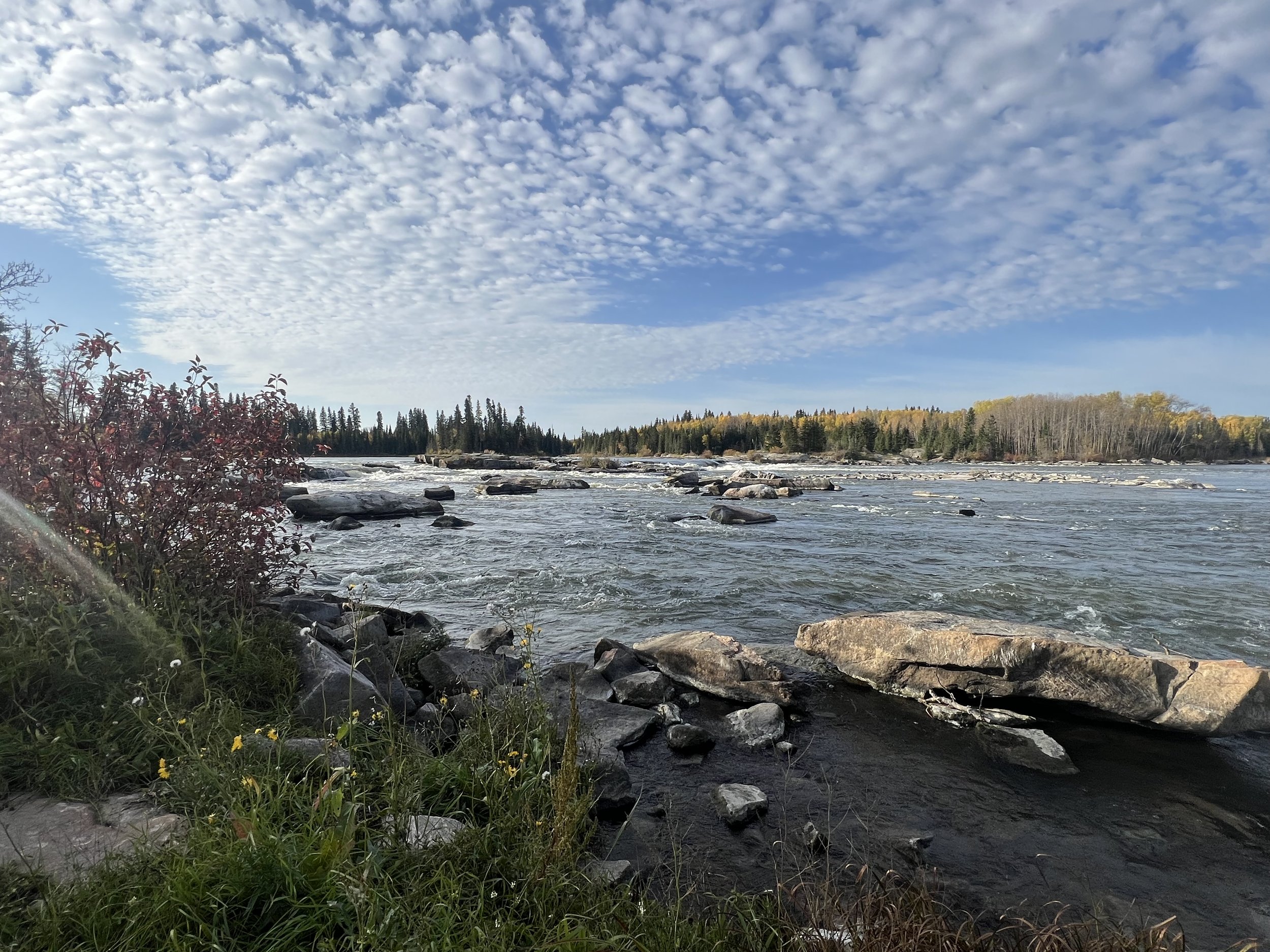
Norway House Cree Nation (NHCN) is a large and historically significant Indigenous community in Manitoba. Located in the north-central region of the province, NHCN sits near the convergence of the Nelson River and Lake Winnipeg, making it a traditional hub for trade and transportation for the Cree people.
The community is known for its cultural richness, strong ties to Cree traditions, and vibrant local economy, which is supported by both natural resources and various initiatives aimed at community development. It has a population of approximately 7,500 members, with an additional 500 community council members who help guide governance and decision-making.
NHCN is also a center for education, health care, and social services for its residents, with various programs that support youth development, language preservation, and economic growth. Its importance is not just in its size, but in its role as a leader among Indigenous communities in Manitoba, with a growing influence in areas such as environmental stewardship, self-governance, and cultural preservation.
The community plays a key role in hosting regional and provincial events, such as Treaty & York Boat Days, and continues to foster a strong sense of identity and resilience.